
2026 February 3rd-April 14th Ankeny Citizens Police Academy

Updated: Apr 26

How would you answer these three questions? Please consider doing so before you read these blog experiences over the next ten weeks. I guarantee you will learn more about how your lived experiences, perceptions, and other sensory-related issues and thoughts shape your Officer persona conversations
This said, many of us can recall wanting to be an Officer or playing Cops and Robbers as children. The lights and sirens that announce their presence captivate us, or even having a favorite Officer at school, Officer Anderson, come and spark curiosity about the person's position, and the protective strength of the badge. Ideally, resonating especially if our family tree has generational lines of those who proudly don the uniform. Yet sadly in today's world, their actions are sometimes viewed with suspicion or questionable intentions, especially because of scenarios that have happened for those who deal and live with situational anxieties, invisible disabilities, and sensory health concerns, no matter the person or the role.
As such, tonight, Administrative Assistant Lisa Quick and I began our A-NOD journey, by invitation and selection of the Ankeny Police Department, to be able to tour, and interactively become aware, learn how to advocate regarding, and then aid in the presentation of the information and experiences that our other 28 peers and I will learn in the next 10 weeks. As such, I have decided to blog what Lisa and I see, hear, and even validate what is being presented to us by the Ankeny Police Department Officers and Staff, allowing us to experience and then to "become Community Citizen Ambassadors," that is, if we would like to speak about what we learn to other community members.
This evening marked the beginning of the 27th year of the Ankeny Citizens Police Academy. We were greeted by Angie, whose infectious energy set the tone as she led us to our meeting room and answered every detail with enthusiasm. Our next introduction was to Mike Shrock, the City Manager of Ankeny, Iowa, who discussed the city's budget, the department's funding priorities, the criteria for determining these priorities, and the significance of his presentation, which followed that of the Mayor, who was unable to attend. We then met Chief Potts, who shared his initial aspiration to be a Radio/DJ announcer, but upon learning the pay was only $2.50 to $3.15 per session, he decided to follow in his father's footsteps as a Police Officer. He recounted his journey and reflections on becoming Ankeny's Chief of Police, beginning in 1999, with only 28 Officers, and now as Chief, he is that to 80 Officers. demonstrating a passionate energy and genuine care for his Officers, whom he considers brothers rather than just a team. After Chief Potts we heard from Lt. Bowerson, who then shared his reasons for wearing the uniform, emphasizing his commitment to serve and protect beyond his duties., and who specifically talked with us about the 16 weeks of training that those who begin at the Iowa Enforcement Academy commit to before the ongoing training at the Academy, hard on families, yet important training for all in the name of safety and support for all. all of which is required of 2400 hours annually to then voluntarily continuing each individually, teamed and uniquely had so that Ankeny Police "can be more as a stated Department of Excellande, they are, and not just to the communities that they serve and protect, also to those brother Officers who may not have "the trainings of excellence that Ankeny receives" This all said, as part of our tour, he also provided insights alongside Sgt. McGraw, who joined us after participating in a state forensic case involving multiple cities. which they both mentioned, would be one of the interactive areas we would explore further in the coming weeks.
This said, next Tuesday, Lisa and I will be learning about Patrol Duties and Functions, Support Services Divisions, and Investigations, including search warrants, subpoenas, consent, exigent circumstances, and detective case work.
Why is this important? Primarily because many of our team members have loved ones who have either served on the Police Force, are currently serving, have retired, and share their experiences, or act as consultants, and most importantly, because of their dedication. With this in mind, A-NOD aims to deepen our understanding and "shed light on the myths and gaps that can create barriers between Officers and Community Citizens." We may also advocate for Officers within our Communities based on what we learn. I have already inquired about the importance of mental health services for Officers and whether there are data sources that could "infer a percentage of those who may deal with situational anxieties, disabilities, or sensory health concerns," and I was able to comment on what was presented. I left feeling inspired, as this was a full circle moment for me; the Ankeny, Iowa Police Department was where the A-HA moment for A-NOD was conceived, and now I find myself "answering on some level "the dream of once thinking I wanted to become an Officer, even just a bit, to overcome my own 'intimidation persona'."
A win-win for all!
February 10th-2026
Patrol Duties and Functions, Support Services Divisions, and Investigations, including search warrants, subpoenas, consent, exigent circumstances, and detective case work.
Tonight, we learned that a "Stop Sign" is not just a stop sign, but rather it is a Public Announcement to dictate patrolling. what the Patrol Shifts of three shifts and the functions within each of them, especially the support services that assist each of those shifts, for those the Ankeny Police Department serves. We also learned that if persons continue to keep driving past a bus stop since 2022, those that did can be charged with a ticket, and one could also receive a simple misdemeanor for one year.
We also learned about search warrants and subpoenas. After the Detective had asked "if we knew what that was". I raised my hand and said that I did, and told of a life experience that I had. Basically I had shared that during my Senior College Year I was able to "assist a Subpoena Representative" to give a subpoena to someone". Basically I was told, "just give the subpoena and step back and walk quickly away". I did and afterwards I knew this was something that I didn't want to do again. Then we learned that a search warrant needs to be specifically spelled out before those Officers can "search the premise", that is if they came across another reason why "the search needs to be" then another search warrant needs to be got, after they pause the search that is in process, then the search can continue. Nothing happens until the Search Warrants are in place or the scene is contaminated, all of which requires a consent from a Judge, all in the world of Detective Case Work. See you next week.
February 17-2026
Today, energies were high as Lisa and I learned that this night was the interactive piece of the program. We got to meet Sandy, the K-9 that smells out the "smell of flash drives, cellphones, all electronics, big and little that are initially missed by the detectives. Trained at 4-6 months by their handlers and then 2 weeks every year, 3-6 months thereafter. Sandy is food-trained instead of toy-trained. Better because labs tire out of the toy stage, then 80% of the finds happen on the crime scene. Also learned that the amount of electronics can be found in an Olympic pool parts per trillion. All of which can assist in Cyber Tips. Cyber Tips, which are millions of millions. Crimes that surprise the perpetrators because they don't think "the stolen can't be found". This said, if one injures the K-9, then it is considered a punishable offense. Then we spent the rest of the night learning about USE OF FORCE. Up until 2010, Officer Compliance was Ask, Compliance, Tell Them, Show them, and then physically manipulate the system. (Robert would have been 5 at the time and Michael 3) According to nationally known stats 98.000 deaths occurred, not from police, but from our medical health professions. This said, 1173 persons died from Police Interactions, more so blacks and hispanics because of fear and safety. This said, USE OF FORCE speaks to the need for Officer Presence, then Soft Hand Techniques, Ground/handgun threats, show of force, and then TAZE-control. Cops do not think to shoot first, but rather use all tactics first and then. Sadly, in 2026, there have been 12 deaths of Officers, and the need for social worker support for the mental health piece is being implemented more so. What matters the most is reasonable doubt at the time of the incident, not what appears to be "happening at the time," which would be discussed at court proceedings and outcomes, particularly if a gun is involved. This, of course, is also addressed more so during mental health, disabilities, and sensory health concerns, no matter the role of the person within the incident, the ideal.
February 24th-2026

We live in an era brimming with vitality, stress, anxious moments, and crises, all of which can affect our lives, particularly when our loved ones face situational anxieties, invisible disabilities, and sensory health issues, regardless of their role or identity. That being said, regardless of who we are, when we see a police officer's lights and sirens in our rearview mirror, we all recognize the anxious feelings that accompany it.
On Tuesday night at the Our Ankeny Citizen's Police Academy, Lisa Quick and I, and our 36 fellow members, began the evening by learning about various traffic data machines that Officers, Sheriffs, Sergeants and Detectives of Ankeny utilize to track the rise in traffic violations, usually begun as a complaint from a person within their community of neighbors. Neighbors who would like to be assured that their complaints are being tended to as well as then, because the data distinguishes what type of equipment will then be used in those areas and can assist drivers to help them become aware of their excessive speeds or the need to adjust them before being stopped by Officers as well. Afterwards, Ankeny's Officers discussed and demonstrated with us the two specific types of Traffic Stops.
During a routine traffic stop, a police officer is sent out with information provided by dispatchers. As an officer explained to me during my Basic Traffic Stop Scenario Exercise, this information is often limited, and officers sometimes wish for more details, as the initial information might not be enough. This can make the situation risky, especially if the driver or a passenger in the car is dealing with issues not immediately visible to the Officer to note, especially if this is not communicated at the moment when it may have made a difference in the outcome. This said, when an officer approaches the vehicle with lights and sirens on, they wait for the driver to show compliance and pull over. Sometimes compliance is immediate, but other times, due to the driver's actions, the situation can escalate from a basic traffic stop to a high-risk one, which I will explain later in this blog. This said, if the officer sees that the driver is complying, they will inform the dispatcher of the number of people in view and that they are approaching the car. If this occurs at night, the officer might call for backup, direct the police car's light toward the vehicle, and take necessary steps to ensure safety for both themselves and the stopped individual. As such, after checking the insurance and license, based on the results, the officer will decide the nature of the ticket, depending on the actions of others in the car and any "reasonable issues" that arise. Again, all this can determine whether or not the Basic Traffic Stop stops here, or, because of other concerns and issues, if they arise, then proceeds to a High Risk Traffic Stop.
High Risk Traffic Stops are situations that officers are trained to handle with precision due to the potential involvement of multiple firearms. Officers undergo extensive training to manage these scenarios effectively, where split-second decisions are both reasonable and justifiable. Although the outcomes often provide clarity, media portrayals may not always capture the reality of these critical moments, as they occur without public presence. Each High Risk Stop is unique, potentially dangerous, and unpredictable in terms of how an individual will respond to commands to raise their hands and comply with instructions. During a group exercise involving a high-risk scenario, I participated as one of the officers armed with a high-powered rifle to protect my Team Lead Officer, who directed the scenario. I noted my feelings of intimidation, my focus on the scenario, and the awareness of those around me. Reflecting tonight as I write this blog, if I were to redo this exercise, I would not have tried to "ask Lisa to take my picture" because, during an actual training moment, it could have been a distraction and might have affected the outcome. This underscores why A-NOD is committed to raising awareness, advocating for, and assisting those we can help; distractions matter and can impact the outcome for everyone involved.
All said, I am humbled by what I am learning, seeing, observationally understanding, and experiencing. In the scheme of things, it matters.
March 3rd, 2026: Gun Force and Shooting
Today, I learned about Gun Force and Shooting. Since 1970, gun tactics and force have evolved due to unfortunate events and outcomes. These include the Newhall incident in California, the 1986 Miami-Dade firefight where shots had little effect on the assailants, and the North Hollywood shootout in February 1997, which highlighted the need for body armor during a 44-minute firefight. The Columbine incident in 1999 was not entirely accurate in terms of reported outcomes and understanding, leading to changes due to active shooter situations. The events of September 11, 2001, and the War on Terror made us more aware of global issues, yet we were unaware of the Beslan school siege from September 1st-3rd, 2004, where 1,100 people were killed, and the Mumbai attacks from November 26-29, 2008, involving roaming killers, as well as the Paris attacks on November 13, 2015. Why is this important? Because the responders, whose feet are the the first on US Soil, primarily our police officers, face challenges in response time, especially as rank increases, particularly when other roles are called in, and as such they need all the resources that will keep them safe and supported. Their lives depend on this.


Outside of this, Why do you suppose I have my ears and eyes on when the room is hot? It's because my Admin Assistant, Lisa Quick, and I learned about Gun Force and how to shoot a 9mm Glock.
This said I have previously shot a shotgun, taught by my husband Larry Thacker Sr, back in my twenties on my maternal grandmother's farm, and while aiming at cans on a post. As such as a fifty-seven-year-old woman, this was part of my class, week five, marking a new experience before my fifty-eighth birthday.
Below is the result of my shooting. My Police Officer Ben was real thorough as he suggested I slowly work my way through the understanding. And the first five shots were in the square on the left side of my box.
Due to the presence of the four others around me, their instructors, and my own overthinking about the room and its energy, my focus shifted, making my sensory awareness more evident. This shift affected how my last five shots turned out. Ben asked if I was nervous, but I wasn't; instead, I was more attuned to my sensory environment than to focusing on my shots, which the last five shots reflected as they began to stray. Despite this, Ben was proud of my initial shots and remained patient. When I started to "feel the jerk" in my shooting, he confirmed it because he could see it and helped me correct it. It's crucial to maintain proper stance, keep your finger off the trigger, always treat a gun as if it's loaded, and be aware of what's behind your target, all for accountability. Everything I'm learning personally and for A-NOD is important. Ultimately, it's not the media's narrative that reveals the truth, but the responsibility and the outcome of the scenario that truly matter. And at the end of the day this is what we ought to really see, hear and validate.

My friend and Administrative Assistant Lisa Quick and I pose for this moment. BAM!

March 10th-2026: Forensics by Alex Soderburg; Scientific Thinking Behind The Crime Scene Investigations.

This area of discussion is one of my mother's favorite topics. The questioning of how one figures out the crime with the details left behind. The pace of recreating the story of the crime so that the perpetrator can be caught at the end while still maintaining the clues so that nothing becomes tampered with or destroyed. To the untrained eye this is not as easy as it seems and to the very trained Officer is one of the reasons that Alex teaches his classes because this class is the one thta matters as one of the most important because of the work that he and his peers do. And for our class it will be s one of the most important for us to recall in the weeks ahead. So, let's getting detecting.
As mentioned I learned that evidence of a crime scene is very important. Either one has it or they don't. And if it is tampered with or destroyed then the case is harder to crack. So the questions, how does one protect the crime scene, where does one keep the evidence the Officers obtain and what is the process of "putting back all the pieces so that the story can be retold".
To begin with one would need a place to hold the crime scene evidence. This is simply called an Evidence Room and because the very important reason that evidence can not be tampered with or needs to be maintained no one is allowed into this room except the Forensics Detectives. As such these Officers are marked by a Chain of Command, accountability and the guard position of holder of the "keys" that opens the door to the room". And behind this door many cases are held and maintained for many years waiting for the day the story they hold will be solved.
For some, cases like those within the Gun and Cash Room, evidence of this type may have a story of decades and the knowledge of those secret service Officers that first handled them.
When handling hazmat materials there is for safety reasons a room for this, for processing and for the betterment of the Officers and the property of the Officers. Material that is held for long periods of time do not always disintegrate or get less dangerous. Something to consider.
This said, something new in Iowa is the Scenerio Scene Van. This Work Station comes to the Crime Scene itself. This van has a Deep Cell Battery that illuminates a scene up to 20,000 watts up to 10 hours and all solar batteries. A scene does not go quiet when it is dark in fact sometimes a scene is more proccessable when illuminated.
This said, Crime Scenes are temperamental and the environment that holds them does not help. Weather and Human Contact are the biggest forces that can destroy the evidence that the Officers need for the opportunities to solve the case which is why every day the first contact of them of the scene is important. Weather, whether is hot or cold destroys the scene especially if there is someone's body to process as well as Medical Professionals assessment of the evidence, although needed, create unknown adjustments that makes the detectives' job harder because the clues are now "tampered with" , redesigning the scene of the story, this is why Barrier Tape was created, so to prevent the scene from movement.
Movement is not what a Forensics Officer wants to know happened within their Field Day because their logs need to indicate every step of processing that they did within those hours, days, weeks after the incident took place. Communication is most important in all of these cases because one tamper and the case could then turn cold, which could then become troubling while presenting in Court.
Court personal depend on the story the Forensic Officers are telling because they are the eyes, ears and story teller of the recreated crime. Details are very important. Sources of prints, blood splatters, materials used, doors, carpets, DNA, Victim Fingerprints, Body parts, pictures, fluids, anything left behind that indicates what happens is important. The transfers of the physical: hair, soil, blood, seman, shoe patterns, all penitent. All to be noticed during the initial walk scene of the Forensic Officer, even how the Officer walked the scene is important, he or her presence matters. Pages and pages of documented items, time and manner, keeping all up to date during the processing, even after, because something that may not have appeared to matter then, later could. DNA last a very long time. This we were told after we took a swab from our peers' cheeks. And a fun fact if one is a twin, an identical twin, then their DNA is the same, yet if one is a Fraternal Twin then their own is their own.
So, what does a walk though look like. Very detailed we learned. There is the scene, the entry log, the established potential entry points, the documents created and maintained, the observations of the scene by all involved and considered, the sealing of the scene, the processing of the evidence, the condition of the materials, was the lights on or not, was the door open or not open, was the TV on or off, what kind of building or location was it, what was the temperature outside or inside the location, again this matters especially at the crime scene, every question, observation and insight matters until it doesn't. Videos of the scene are taken yet there is no sound during those videos because of the nature of the scene. Some things said during a walk through may appear disrespectful to those present in the Court Room which could then destroy the story being said there. When photos are taken they are of all angles because perceptions matter and the photo of a thousand unspoken words are loud. The bigger the picture is sometime the evidence itself. Again the one thing Alex could not stress enough was the need to "limit handling of the evidence, no cross contamination" Less is more and detrimental if not adhered to especially during "the bagging of evidence or proper handling".
Handling as one can understand is extremely important just like fingerprints are to each and every one of us. As such our fingerprints are unique, each one of us. During our 18th week of gestation we develop our mark. 9 layers of skin, our template, our permanent scar even. Made up of 98.5 % water and 1.5 % salt, amino acids, etc. When brushing for the print, we are looking for the water, the chemical reactions. Reactions that over time particular individual can wear down if one is in labor or mason work. This said, time has a way of doing this to all of us with fingerprints, this and sweat, screations, scratches ,cold and dry times, etc. Which is why time is of the essence to process and tell the story. Cases matter and the ones impacted by the case much more.
All said, the rest of the class we looked at fingerprints, smears, fluids and what not under special lighting and filters as well as dusted for prints with special brushes and materials,, learning that each one of us has left a clue somewhere all the time. Consider that the next time you are thinking that you don't. The mark you leave behind does matter and by the right person can and will be seen.
March 24th-2026 Drone Team and Narcotics Investigations-MId Iowa Narcotics Enforcement
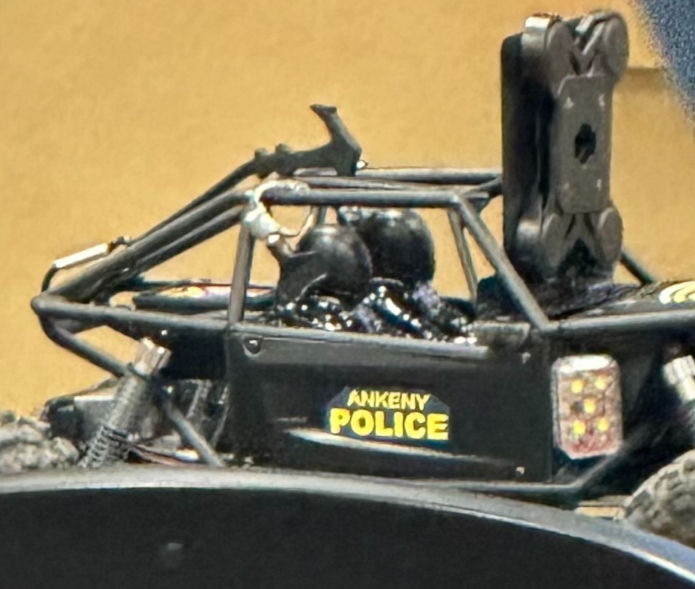
Types of Drones matter all with a Certification of Authorization along a Grid Map up to 400 feet. These missions include Search and Rescue, Fleeing Subject, Building Searches, Assisting the Fire Department, Footprinting, and Other Tactical Operations all according to Situational Awareness Moments. As a group, we were able to see the vehicle drone handler drive the drone down the hallways, down and back up the stairs as well as then see the handler fly the Main Drone up 400 ft, which allows the Officer to "see a license plate" to watch the car drivers if need be. To see yet not be seen for surveillance all of which can be connected to the Narcotics Unit/Mine Task Force.-Crime Stoppers.
March 31, 2026: Use of Force Scenarios and CET-Law Enforcement and Mental Health

Mental health is discussed, trained, and utilized for the sake of all officers involved. 1 in 4 persons deals with mental health issues, and by the age of 17, 19% are dealing with a mental health concern, whereas 5.5% are adults. Taser probes "assist in the need for escalating procedures as a last resort," as there are at least two warnings, including an audible sound, given before the tasers are discharged, aiming to stop the behaviors before the taser does. That said, it is not intended to stop the heart; rather, other events involving the tased individual cause a stressed heart first. This all said the most important is the CET Training that is available, taught and is included more times than not especially beause of the days we are living in.
April 7th: Homicide-Home Invasion.
In this last class, we were given a scenario that actually happened and is still pending outcome, which is why I am not including the scenario details here. Yet, what I will tell you is that this scenario demonstrated all that we learned in this course. A course that for me answered a lot of questions, changed perspectives and lessened my intimidation concerns. I have learned so much and "it is always what it seems and the outcomes matter all the times.
April 14, 2026: Graduation, Distribution of Certificates and Ambassador Status
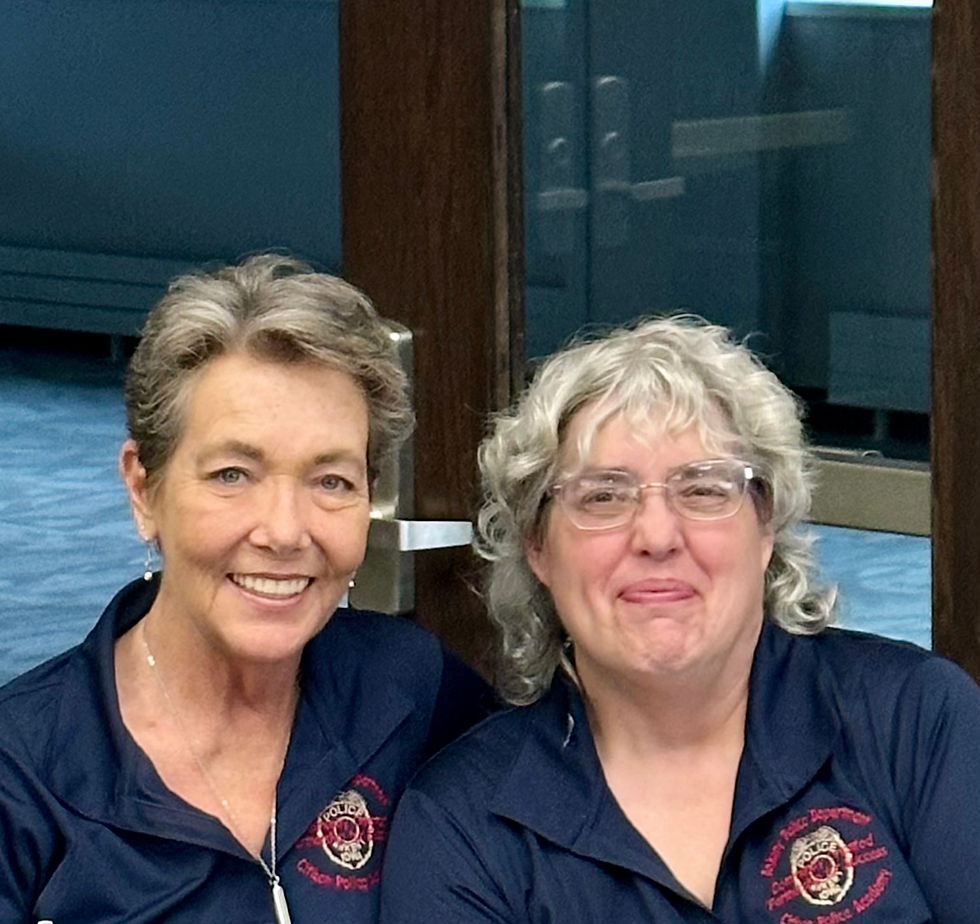
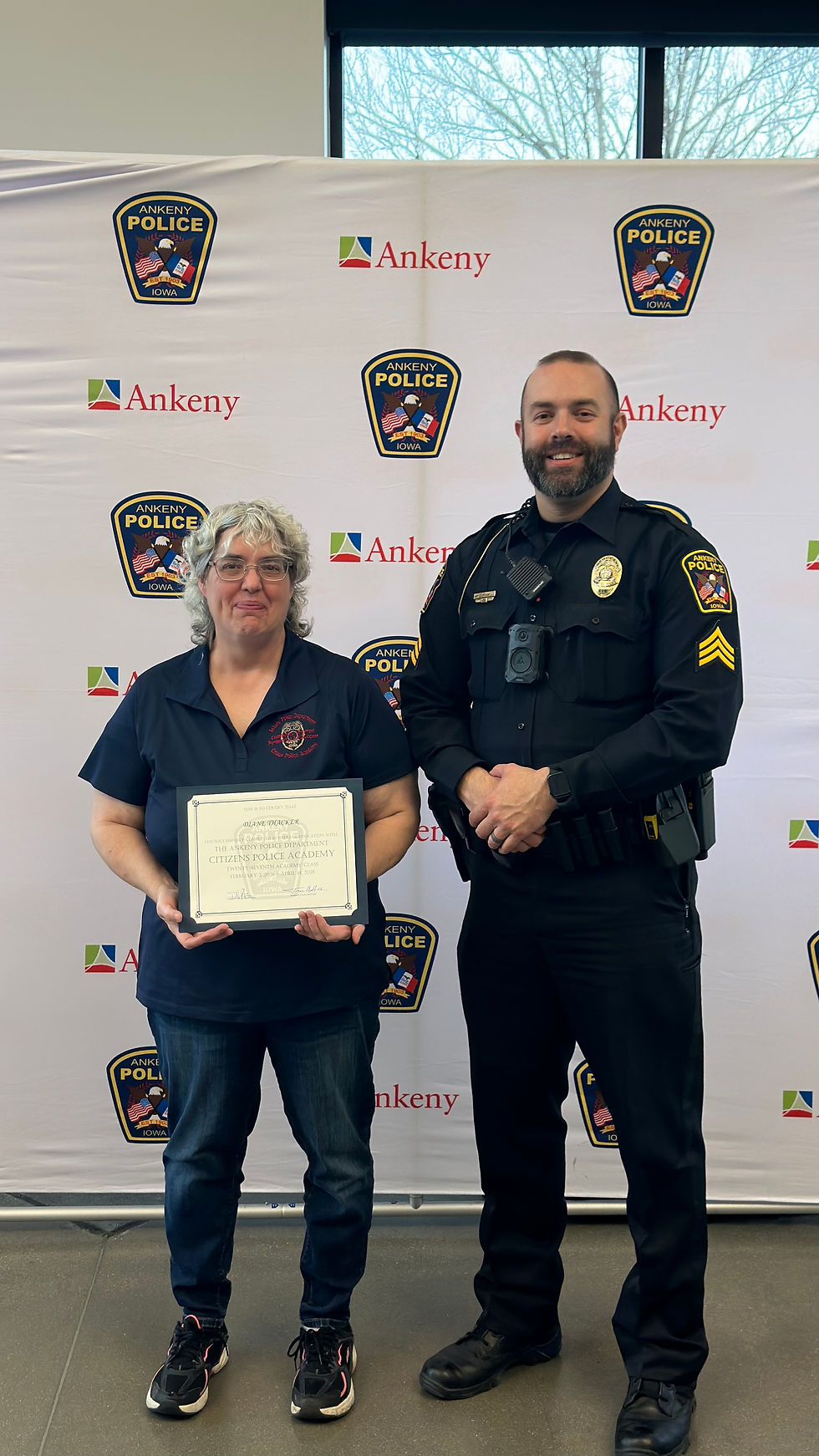
We completed the ten-week course. We learned so much, and it shows. We are very proud of ourselves and look forward to how this information will help us in our resolve to assist and aid others who would like to bring awareness, advocacy, and aid to those who deal with sensory health concerns. Each member of our class of 30 persons received their very own Certificate of Completion.


Comments